If your phone sleeps beside your pillow, stopping the alarm may require one thumb and no conscious thought. By the time you understand what happened, the room is quiet and twenty minutes have gone missing.
Moving the alarm can interrupt that reflex. You do not need a magic measurement. You need a position that makes you leave the sleeping posture before the sound stops.
Start with two or three steps
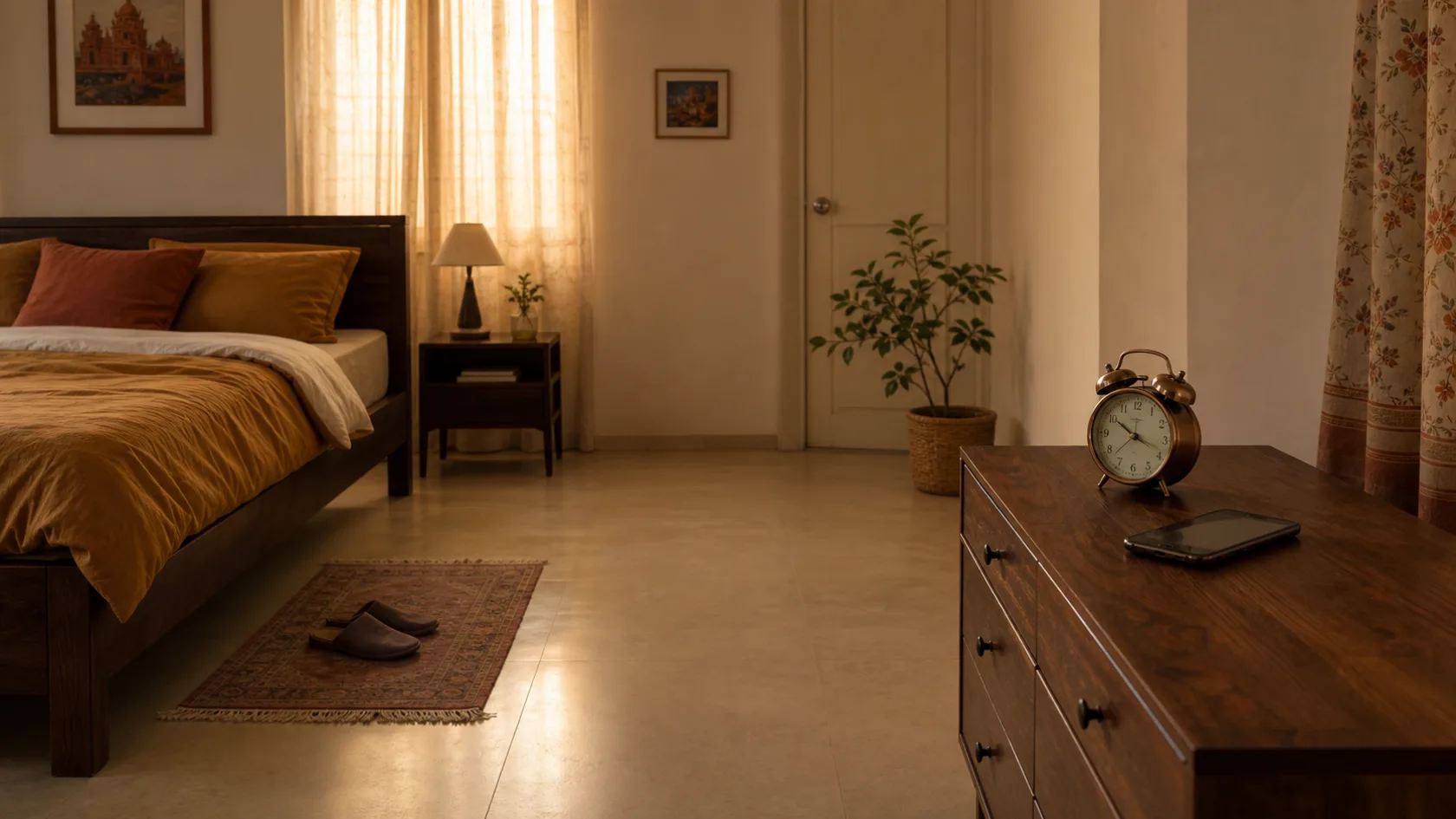
A dresser, desk or shelf a few steps from the bed is a sensible first test. You should have to put both feet down and stand. Once you are upright, the decision to return to bed is at least a real decision.
Across a very large room may be unnecessary. The farther the phone goes, the more volume you need and the more likely everyone else wakes first. Begin with the shortest distance that takes the Stop button out of arm’s reach.
The route must be safe in the dark
Look at the floor from the bed to the alarm. Remove charging cables, bags, loose rugs and anything you could step on when you are groggy. Do not balance the phone on a narrow ledge or place it near water.
If you have mobility or balance concerns, getting out of bed quickly may not be appropriate. Keep the alarm within safe reach and use other cues such as light, vibration or help from someone at home. Safety matters more than winning an argument with the snooze button.
Use a firm, uncovered surface
A wooden desk or bedside cabinet usually lets the speaker project more clearly than a mattress. Vibration may add an extra rattle. Keep the speaker edge clear of books and fabric, and do not charge a phone under a pillow or buried in bedding.
Set a test alarm during the day, lie down in your usual position and turn on the fan or air conditioner. If the sound is already faint while you are awake, moving it farther away is not the answer. Change the position or choose a more distinct tone.
Give the sound one clear job.
Paathshala Clock brings familiar Indian alarm sounds to a simple, distraction-free clock.
Try Paathshala ClockDo not take the whole phone back to bed
The placement trick fails if you stand up, stop the alarm and climb back under the blanket with the phone. Leave it where it is. Put the next action beside it: a bottle of water, the curtain cord or the switch for the main light.
Choose that action the night before. A small instruction such as “switch on the light” is easier to follow than a heroic promise to become a morning person at 6:00.
If you share a room, distance may not be the best tool
A phone on the far wall at full volume can make your alarm someone else’s problem. Try vibration on a firm surface, a wearable alarm or a quieter sound closer to your side of the room.
Partners with different schedules may need separate setups. The right placement is not simply the one that forces somebody to get up. It should wake the person who set it.
One alarm is easier to understand than a trail of them
Placing one device near the bed and another across the room can work as a temporary backup, but a daily obstacle course of alarms often becomes another routine to defeat. If you currently use many alarms, read why multiple alarms can lose their meaning.
Use one primary alarm and, if needed, one genuine backup. The goal of moving it is to create a moment of wakefulness, not a longer sequence of noise.
A simple three morning placement test
- Place the phone two or three clear steps from the bed.
- Test audibility with the usual fan and closed door.
- Keep the same sound and volume for three mornings.
- Note whether you stood up and whether you returned to bed.
- If you could not hear it, improve the sound or position before adding distance.
If standing works but you still feel exhausted, look beyond placement. Check how much sleep your schedule allows and consider whether daytime sleepiness needs professional advice.
The short answer
Put your alarm just far enough away that turning it off requires standing, usually a few safe steps. Keep the route clear, the speaker uncovered and the volume reasonable for the people around you.
Then pair the placement with a sound that stands out. See our guide to the best alarm sounds for heavy sleepers or the broader advice on sleeping through an alarm.