Search for an alarm for heavy sleepers and you will meet a wall of sirens. Volume matters, of course, but “as loud as possible” is not a complete answer. A sound can be loud and still blend into the room. It can also be so unpleasant that your first reflex is to silence it.
A useful alarm sound has three qualities: it is easy to notice, easy to recognise and hard to confuse with everything else you hear during the day.
Choose contrast before aggression
Listen to your bedroom for a moment. Is there a steady fan, an air conditioner, traffic or conversation outside? A soft, continuous hum may disappear into that background. A sound with a changing pattern is more likely to stand apart.
This is one reason a bell, rooster or short musical phrase can work better than a faint electronic tone. The pattern has an identity. Your brain is not being asked to separate one anonymous beep from twenty others.
Try a sound that builds
A gradually rising alarm gives you a chance to wake before it reaches full volume. That can be more comfortable if you share a room or dislike being startled. For some heavy sleepers, though, a very slow fade remains too gentle for too long.
Test the whole alarm, not the first two seconds in a settings menu. If the distinctive part arrives after a minute, you may have stopped it before it ever gets there.
Familiar can help, but ordinary will not
A school bell or a rooster may catch your attention because it means something. That is different from using the same chime for your morning alarm, messages and food delivery notifications. The alarm should be familiar enough to recognise and unusual enough to have one job.
If you change the sound every night, you never learn whether one option works. Pick a candidate and use it for three or four ordinary mornings. Note whether you heard it and whether you stood up.
Try an alarm with a recognisable voice.
Paathshala Clock includes a school bell, rooster, koyal and three other familiar Indian sounds.
Hear the soundsThe bedroom test is more useful than the preview
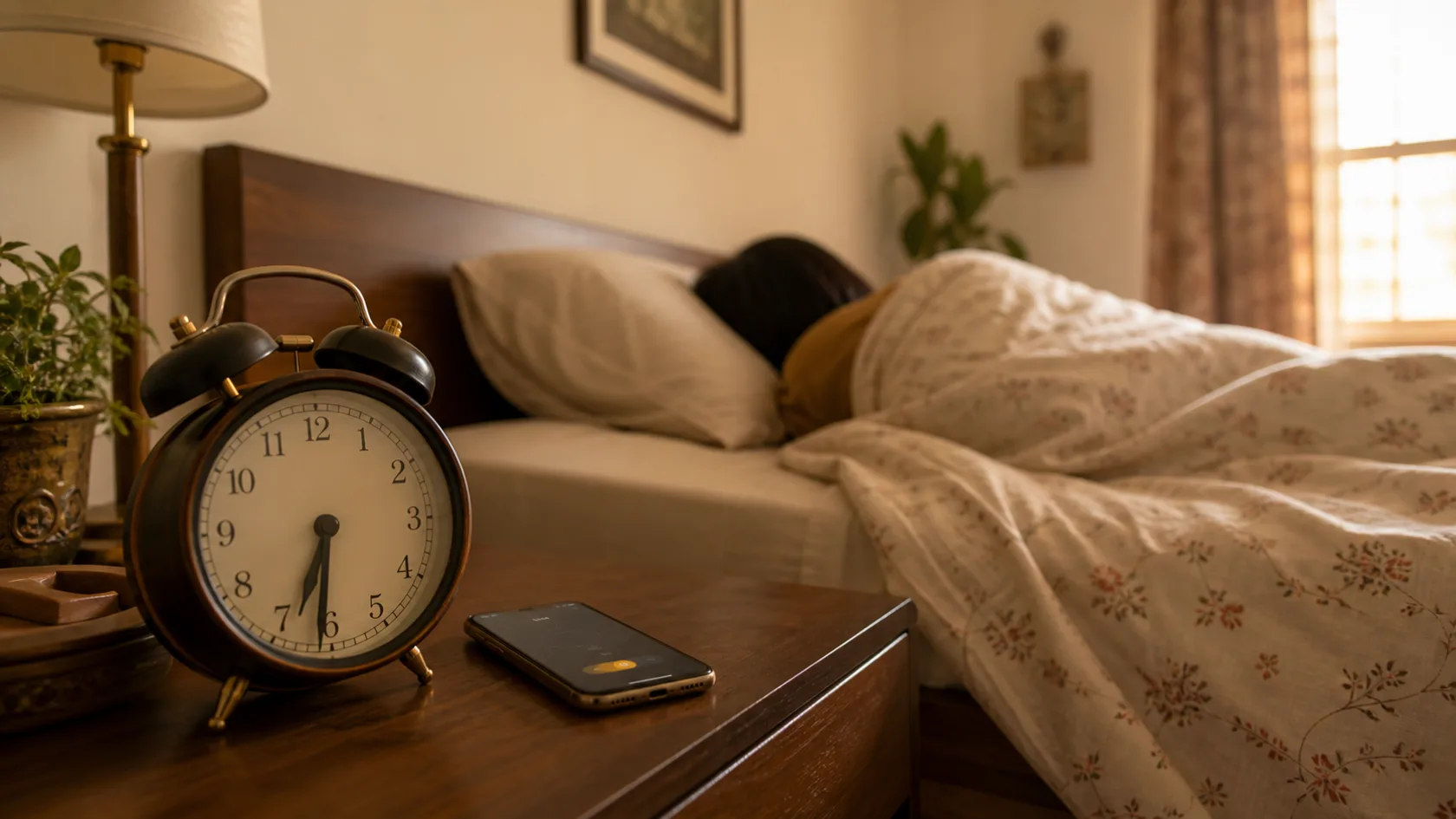
An alarm that sounds powerful in your hand may be weak from the other side of the bed. Put the phone where it will stay overnight. Turn on the fan, close the door and play the alarm at the intended volume.
Keep the speaker uncovered and use a firm surface. Mattresses and bedding can muffle sound. If reaching the phone has become automatic, move it a few safe steps away. Our guide explains how far to place an alarm from the bed without creating a midnight obstacle course.
Combine cues instead of punishing your ears
If sound alone is unreliable, add another cue. Vibration on a firm wooden table can be surprisingly noticeable. Morning light from an open curtain or timed lamp can help the room feel less like the middle of the night. A wearable alarm may suit someone who shares a room.
More cues do not have to mean more alarms. One alarm using sound, vibration and light is a clearer instruction than six sounds spaced five minutes apart.
What should a heavy sleeper try first?
- Choose a medium to loud sound with a changing, recognisable pattern.
- Reserve that sound for waking up.
- Test it in the real room with the usual background noise.
- Keep the speaker clear and the phone on a firm surface.
- Use vibration or light as a second cue.
- Give the setup three or four mornings before changing it.
If the sound works but you keep pressing Stop, the next problem is probably not the sound. Try changing the phone’s position or follow this seven day plan for breaking the snooze habit.
Do not ignore the amount and quality of sleep
An alarm is the last few seconds of the night. It cannot repair everything that happened before it. The CDC recommends seven or more hours for adults aged 18 to 60 and notes that feeling tired despite enough time asleep can be a sign of poor sleep quality.
If you regularly cannot wake despite allowing enough time for sleep, or you remain very sleepy during the day, speak with a qualified healthcare professional. The right response may not be a more frightening ringtone.
A sensible starting answer
For many heavy sleepers, a clearly patterned bell or familiar call at a firm but not painful volume is a better first test than a soft ambient track. Put it somewhere audible, add vibration and keep the setup consistent.
There is no universal winning sound. The best one is the sound that wakes you in your bedroom, on your schedule, without making the household dread sunrise.
For a broader comparison of tones, see how to choose an alarm sound you will actually wake up to. If you rely on a long row of backups, read why multiple alarms may stop helping.