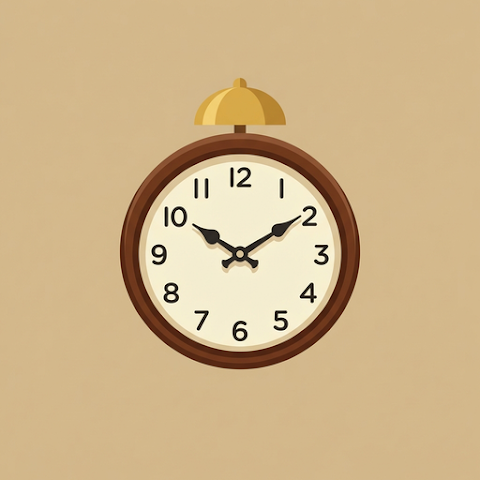

A photograph asks you to look. A familiar sound can catch you while you are doing something else. The whistle of a pressure cooker comes through a neighbour's window and, for a moment, you remember waiting for breakfast before school. Nothing dramatic happened. The scene simply returned.
People often describe this as being transported back. The phrase may sound grand, but the memory itself can be wonderfully ordinary: a uniform hanging behind a door, a parent calling from the kitchen, a Sunday morning television programme about to begin.
A sound becomes part of the scene
Memories are not stored as neat recordings. A personal event can include a place, people, feelings and sensory details. When one part of that pattern appears again, it can help the rest of the scene come to mind.
This is why a sound does not need to be beautiful to matter. The click of a cassette player may be tied to hours spent making a mixtape. A metal school bell may be tied to the relief of the final period. The sound gained meaning because it was present while life was happening.
Researchers call this a retrieval cue. In plain language, it is a small prompt that helps a memory find its way back.
Repetition makes the cue familiar
Childhood routines repeat. The same bell ends class. The same theme tune begins a programme. The same scooter starts below the bedroom window. Each repetition gives the sound another chance to become connected with a place and a period of life.
Research on music offers a useful parallel. In a study of 100 young adults, familiar music brought up more personal memories and did so faster than unfamiliar music. The study was about music, not pressure cookers or school bells, so it cannot explain every everyday sound. It does show how strongly familiarity can affect access to personal memories.
Often, you heard these childhood sounds without choosing them. They belonged to the environment. That may be part of their charm now. They recall not only an object, but a whole routine that once felt too normal to notice.
The surprise makes it feel stronger
You can deliberately sit down with an old album and remember school. An unexpected sound works differently. It arrives before you have prepared a story about the past.
Suppose you hear the old landline ring in a film. You might first remember running to answer the phone, then the table it sat on, then the little notebook of numbers beside it. One detail leads to another. The quickness of that chain can make the memory feel unusually vivid.
That does not mean every recollection is perfectly accurate. Memory is reconstructive. We rebuild a past event from the pieces available to us. The feeling can be real and powerful even when a few details have shifted over time.
Sound also carries emotion
The same noise can mean different things to different people. A school bell might recall freedom for one person and an unfinished maths test for another. A temple bell might feel peaceful because it was part of mornings with a grandparent. A rooster may mean summer holidays, or simply a very early wake up.
Context gives the sound its emotional colour. This is why there is no official list of nostalgic Indian sounds. Region, language, family habits and age all change the soundtrack.
Your morning sound can be useful and familiar.
Paathshala Clock includes six Indian alarm sounds, from the school bell to the koyal, in a simple retro clock for Android.
Try Paathshala ClockNotice the sound before it disappears
Many familiar noises fade quietly. Landlines leave the hall. Mechanical bells are replaced. Television opening tunes become a skip button. We usually notice the loss only when the sound returns years later.
You do not need to preserve every noise. It is enough to pay attention when one brings something back. Ask what arrived with it. A room? A person? A particular time of day? That answer is often more interesting than the sound itself.
If you want a few examples to start with, read six sounds every Indian 90s kid remembers. For the alarm you hear tomorrow morning, see how to choose a sound you will actually wake up to.