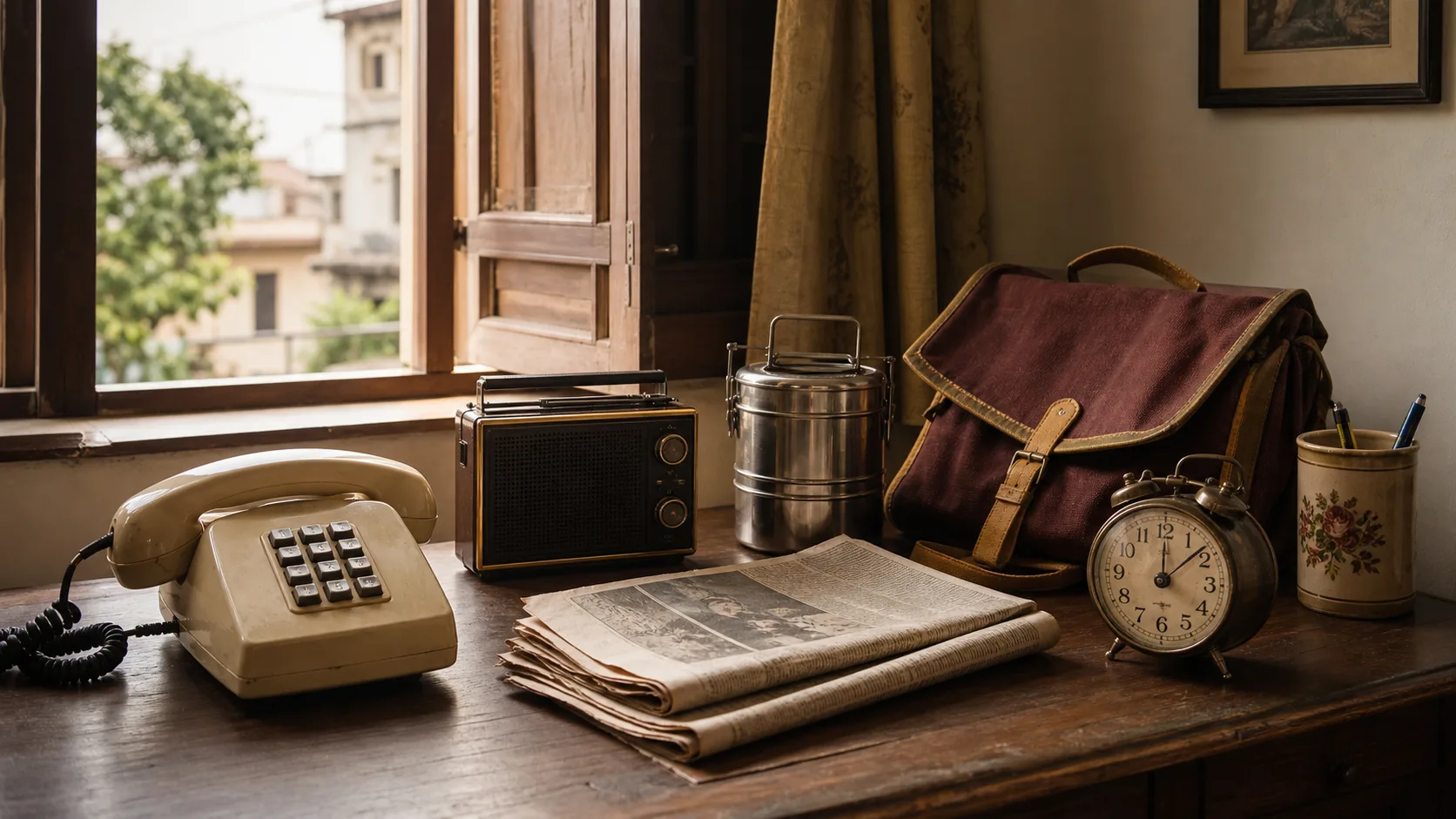
Before phones began vibrating quietly on bedside tables, mornings in many Indian homes announced themselves. A pressure cooker claimed the kitchen. A bicycle bell passed the gate. The landline rang from the hall, and everyone shouted for someone else to pick it up.
These sounds were not designed to be memorable. That is probably why they are. They belonged to ordinary days, repeated often enough to settle somewhere deep. Hear one again after years and the room around you can change for a second.
1. The school bell
You could tell what the bell meant before anyone spoke. The morning bell asked you to hurry. The short break bell sent steel tiffin boxes clicking open. The final bell was different. It released an entire corridor at once.
Many schools now use electronic tones, but the old metal bell had no interest in being polite. It rang across classrooms, playgrounds and the road outside. Even today, that clang can bring back chalk dust, brown paper book covers and the race to reach the school gate.
2. The pressure cooker whistle
The cooker did not need a clock. One whistle could mean breakfast was nearly ready. A few more might mean dal for lunch. From another room, you could hear a parent lowering the flame before the whistle had fully faded.
It was part kitchen sound and part household signal. On busy mornings it competed with running taps, cupboard doors and somebody asking where the other sock had gone.
3. The landline ring
A landline call belonged to the whole house. There was no private screen showing a name. Someone answered, asked who was calling and then covered the mouthpiece to shout for the intended person.
The ring itself had a certain confidence. It expected to be heard from the bedroom, the balcony and sometimes the neighbour's house. If the call came late at night, it could make everyone pause.
4. The temple bell
For some families it came from the small prayer space at home. For others it travelled from a nearby temple, mixed with the first traffic of the day. Either way, the sound carried a sense of morning beginning properly.
It did not demand attention like an alarm. It simply marked a moment: a lamp lit, slippers left outside, hands brought together, the day still new.
5. The rooster
Not every 90s childhood had a rooster outside the window. Many still met one during summer visits to grandparents, family trips or mornings when the neighbourhood was quieter than usual.
The surprise was how early it started and how little it cared whether anyone wanted to wake up. Long before sunrise alarm lamps became a product category, the rooster had already perfected the job.
6. The koyal
The koyal was the gentler morning sound. Its call could float in through an open window, disappear behind traffic and return when the street settled again. It often belonged to warmer months, when ceiling fans ran through the night and mornings arrived bright.
Unlike a ringtone, it never repeated with exact timing. You listened for the reply from another tree.
Why put these sounds in an alarm clock?
Because a useful sound can still feel familiar. Paathshala Clock turns six everyday Indian memories into alarm choices, without feeds, accounts or extra noise.
Try Paathshala ClockThe sounds were ordinary. The memories are not.
Nostalgia often arrives through small things. A steel latch. A radio tuning between stations. The click of a cassette door. None of them looked important while they were happening.
The six sounds here are only a beginning. Ask ten people what their childhood sounded like and you may get ten different answers. A kulfi seller's call. A scooter starting downstairs. Doordarshan before the programme began. Rain hitting a window shade.
Which sound would you add?
Read next: why familiar sounds can bring childhood memories back, or learn how to choose an alarm sound you will actually wake up to.